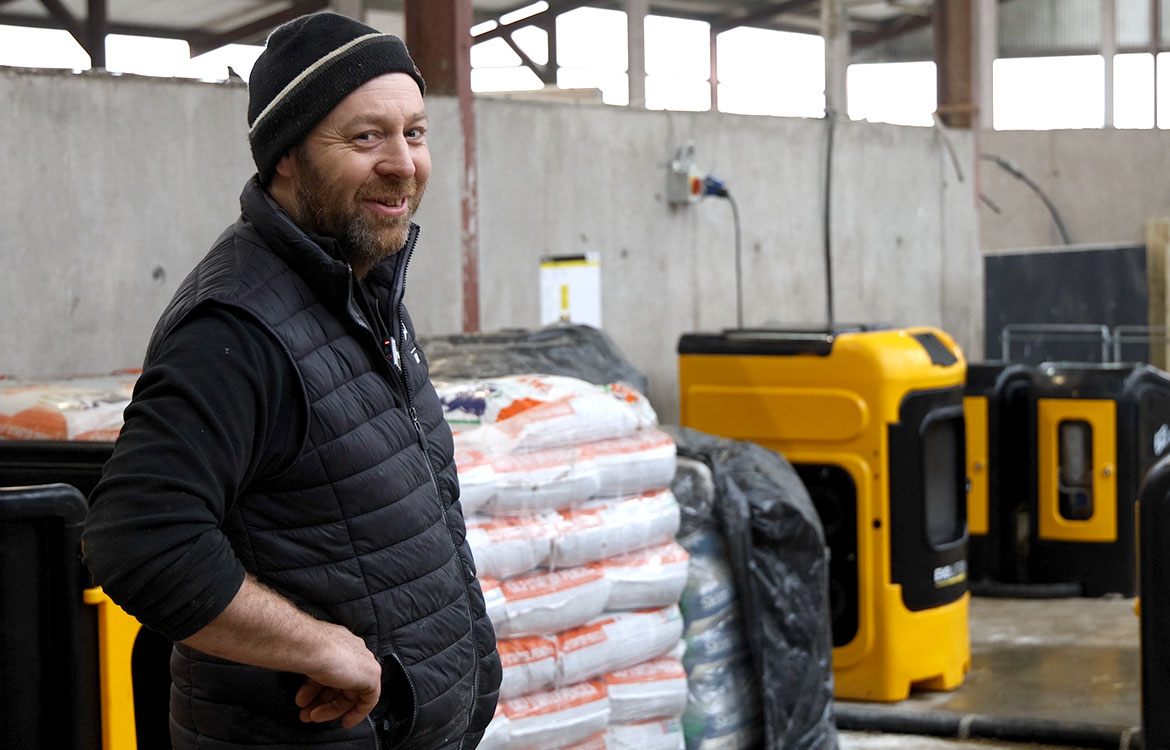
On the outskirts of Carrickmacross, County Monaghan, Donal Patton is in the middle of his first season using the JFC Evolution Automatic Calf Feeder. Calving 140 cows, he knew that as numbers climbed, mornings and evenings would quickly become stretched, especially on days when help was thin on the ground.
Just a few weeks in, the difference in the shed is already noticeable. Feeding sessions are shorter, the routine is more manageable, and teh system has slotted quickly into the daily flow of work.
As Donal puts it, the feeder is "cutting a good bit of labour out of it, when you're on your own in particular."
On Donal's farm, getting calves settled into a pattern early is key to keeping the shed running properly during spring.
His system is simple and structured: calves start in an isolation pen for colostrum and heat, then move to small groups on teat feeders for five or six days, before graduating to the automatic calf feeder.
"Training them in so far has been pretty easy," he says. Most calves adapt quickly. "Nine out of ten calves, once you put them in once, they'll take to it. With the odd calf, you'll have to come back and go again, but they're pretty easy trained."
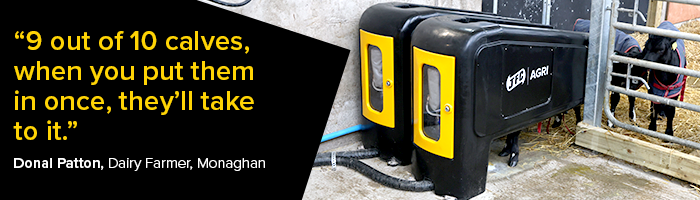
What makes the transition work so well is how quickly the calves recognise and adapt to the feeding station. Once introduced, they return naturally, and Donal's training process gets them used to the automatic calf feeder within a day or two. It provides milk at a consistent temperature, and the presentation of the teats removes the usual hesitation calves have when switching from group feeders.
With that early learning curve out of the way, Donal can move calves through his systme faster and focus on the growing workload as calving continues.
Feeding calves is only one part of the workload during spring. Alongside milking, checking newborns, treating any issues, and keeping an eye on cows that could calve at any moment, it's a season where farmers get pulled in every direction.
This is precisely where the automatic calf feeder has already made a real difference.
With several dozen calves on the system, feeding now takes around twenty minutes to half an hour in the morning, and the same again in the evening. Before automation, those sessions ran much longer, particularly on days when he was working on his own.
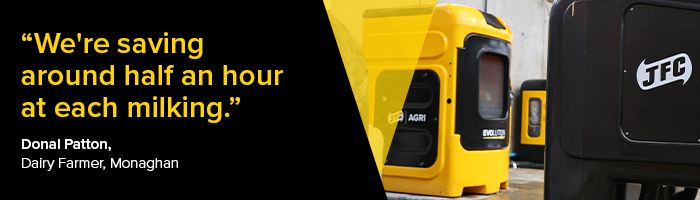
That reclaimed time goes straight back into the open-ended jobs of calving season.
Even only partway through his first season with the system, Donal can already feel the shift: fewer bottlenecks, less pressure, and a routine that's easier to maintain as the pace of calving builds.
One of the early advantages Donal noticed was how easy it became to keep track of calves that were slightly off form. Instead of relying on visual cues alone or trying to judge intake from group feeders, the information is now waiting for him on the screen.
"We can see the calves that aren't feeding," he says. "We can go in and treat them if need be."
It means issues like scour can be picked up sooner and dealt with before they become bigger problems.
The HMI touchscreen has also been straightforward to work with. Adding calves, calibrating the machine, and checking intake quickly became part of the routine, even in the middle of a busy period. "It's handy enough to follow. It's not a big deal," Donal explains.
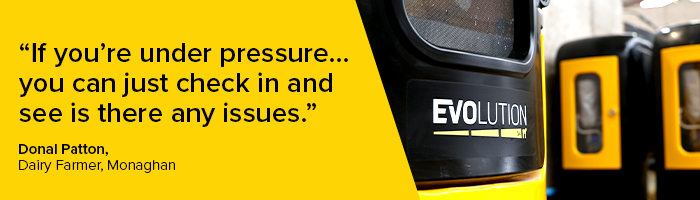
For off-farm evenings or days where other jobs take priority, the mobile app has added another layer of reassurance. A quick glance shows which calves have fed, who hasn't, and whether any needs attention later on. As Donal puts it, it's useful "particularly if you're under pressure with other things."
Across the shed, the result is the same: clearer information, fewer unknowns, and a much more efficient way to stay ahead of calf health each day.
When farmers decide to adopt automation for the first time, reliable support is extremely important. Donal had one small issue in the early days, and it came at a time when you can't afford delays.
"Rang the lads up on the Sunday morning, early," he says. "They talked us through it and there was no problem."
Nobody needed to call out, and he was up and running straight away.
That experience underscores a key strength of any JFC Evolution product: help is always available. Whether it's a question during setup or a fix in the middle of calving season, the technical team is on call around the clock and ready to guide farmers through whatever they're dealing with.
Only a few weeks into his first season with the automatic calf feeder, Donal is already seeing meaningful changes in the shed.
Time saved: Shorter morning and evening feeding sessions.
Better oversight: Clear intake data for spotting issues early.
Steady transitions: Calves training easily and settling into routines.
Reliable backup: Technical support is available whenever it's needed.
The system has already become part of daily life on the farm, easing the pressure during one of the busiest times of the year.
Are you considering a move to Automatic Calf Feeding?

Tuam, Co. Galway,
H54 RX46, Ireland
+353 93 24066
Maesbury rd, Oswestry,
SY10 8NN, UK
+44 16913 20003
info@jfcevolution.com